Notes are useful when they preserve facts you can turn into a clear report. A page covered in disconnected impressions may feel thorough and still fail when you need to identify who moved an object or when a witness arrived. Practice observation with a short original scene, record a few deliberate categories, and keep uncertainty visible instead of filling it with a plausible story.
Choose useful details
Begin with people, location, time when supplied, actions, objects, and statements. These categories are a working aid, not an official note-taking format. In a short scene, a red folder may matter because it changes hands; the pattern on the wall probably does not. Ask whether the detail helps identify a participant, explain an action, or preserve an important sequence.
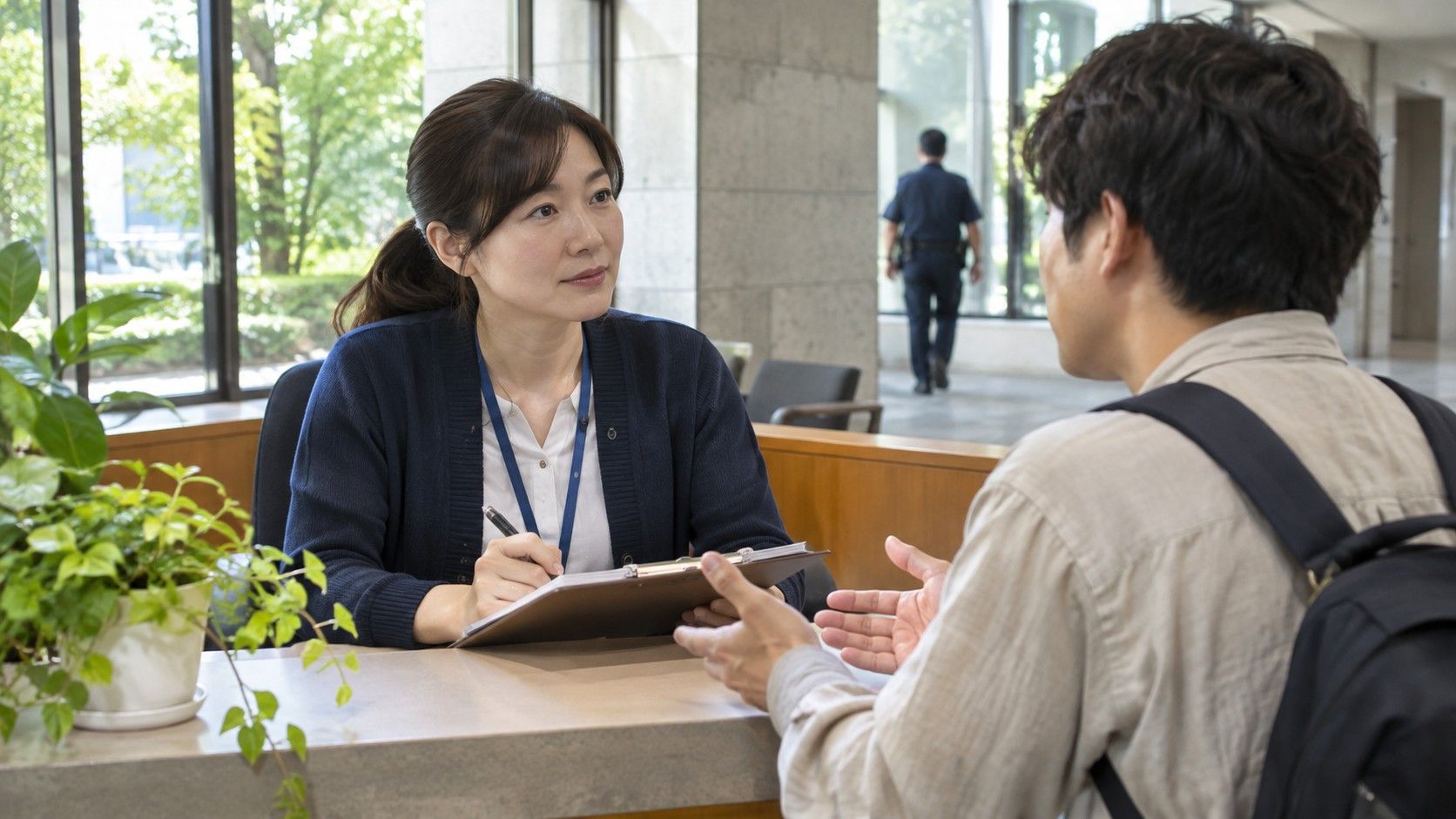
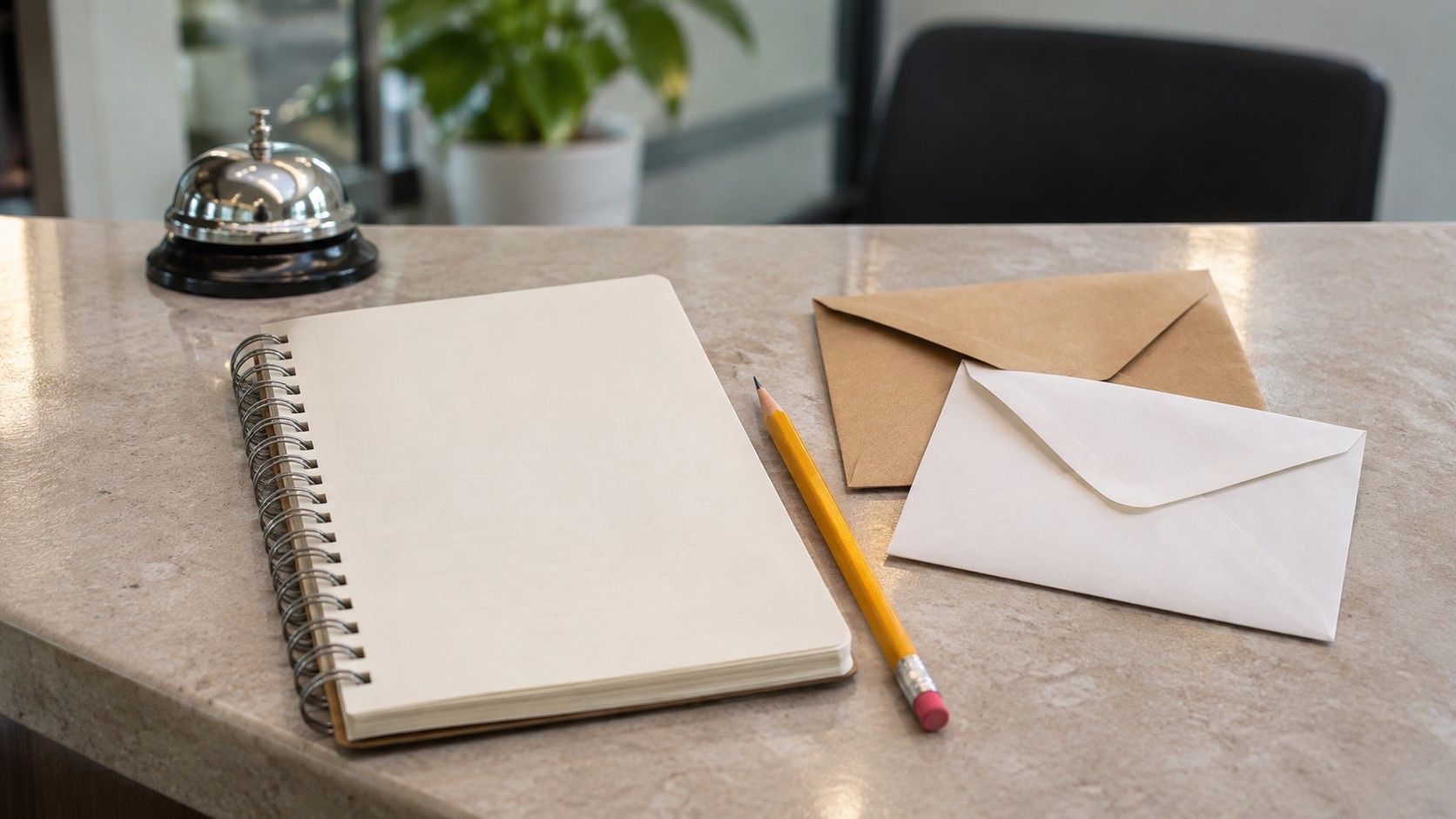
Use this original exercise: a courier enters a small lobby, leaves two envelopes on the desk, and speaks with the receptionist. One envelope is white and one is brown. A visitor arrives afterward and takes the brown envelope when the receptionist points toward it. The courier then returns and says that the brown envelope was intended for a different office. The sequence and the identity of the envelope are central facts.
A useful note might read courier leaves white plus brown; visitor arrives later; receptionist points; visitor takes brown; courier returns and reports wrong office. A weak note might read mix-up, careless receptionist, stolen package. The latter introduces blame and a conclusion the scene does not establish. Your shorthand should compress the facts without changing their status.
Separate people and actions
Give each person a stable label and attach actions to it. Courier, receptionist, and visitor are clearer than a chain of he, she, and they when the scene moves quickly. If the exercise supplies names, use them accurately. Do not invent names to make a report easier to write; a role label is enough when that is the information provided.
Leave a small amount of space between participants in your notes. For example, write the courier's actions on one line and the visitor's actions on the next, then connect them with a simple sequence number. You do not need a decorative diagram. The purpose is to prevent the visitor's arrival from becoming the courier's return when you draft from memory.
Be especially careful when an object changes hands or location. Record who placed it, who moved it, and where it went. If the scene does not show what happened after the visitor left, stop the account there. An inference about delivery may be reasonable in everyday conversation, but it is a different kind of information from an observed action.
Use a second viewing well
If your practice format permits a second viewing, use the first to understand the event and the second to check identified gaps. Before replaying, mark two or three questions in your notes: which envelope moved, whether the visitor arrived before the courier left, or the exact statement made on the courier's return. Rewatching with a purpose is more productive than trying to absorb every detail again.
Do not erase an uncertain first impression and replace it with certainty unless the second viewing resolves it. You may discover that the scene never shows a detail you assumed was present. Mark not shown rather than inventing a resolution. That notation can prevent a later report from turning an unknown destination into a named office.
Practice within the actual exercise's replay rules. Unlimited home replays are useful for analysis but produce a different task from an attempt with a limited number of viewings. Keep those results separate. Once you have studied the scene extensively, use a fresh incident to test observation rather than claiming that a polished rewrite measures first-attempt performance.
Turn fragments into sentences
Convert a note into a sentence by adding a clear subject, an action, and the supported detail. Visitor takes brown becomes The visitor took the brown envelope from the desk. Courier says wrong office becomes The courier said the brown envelope was intended for a different office. The second sentence attributes the information instead of presenting the intended destination as something you independently verified.
Use ordinary verbs and a consistent past tense for a completed event. Abbreviations that made sense while watching should not survive into the report if they confuse a reader. A note such as rec pt may be enough for you at the desk, but the finished sentence needs receptionist or another unambiguous label. There is no benefit in making the reader decode your private shorthand.
Draft the central sequence before spending time on small edits. If your first paragraph clearly records who left the envelopes and who later took one, you can then improve sentence boundaries. Polishing an opening sentence while leaving the key movement unwritten is a poor trade under a short writing limit.
Check gaps without inventing facts
Review the draft against the notes in both directions. Every claim in the draft should have a source; every important note should appear where it helps the account. This catches two common problems: added details that feel natural and omitted actions that remain only in your head. Highlight each mismatch rather than relying on a general impression that the report sounds right.
Look for statements that quietly assign intent. The visitor took the envelope is an action; the visitor deliberately stole it is a conclusion about knowledge and purpose. Unless the exercise supplies facts supporting that conclusion, retain the action and the surrounding context. Neutral language is precise because it makes the limits of the observation clear.
Save the note page with the first draft and a corrected draft. For the next exercise, choose one target such as consistent labels or statement attribution. Use a different scene involving a dropped object, a delayed delivery, or two similar items. A few careful notes that survive this review are more valuable than a crowded page you cannot translate into a trustworthy account.